

Choosing the right method for steel corrosion protection is an investment decision that determines the durability, safety, and actual operating costs of agricultural machinery, trailers, and steel structures. At Cynkomet, we prioritize longevity, which is why we want to present the key differences between hot-dip galvanizing and painting.
The Mechanism of Cathodic Protection
If the zinc coating is damaged down to the “live” steel (scratches, abrasions), sub-coating corrosion—typical for paint coatings—does not occur. This is where the galvanic cell mechanism comes into play. According to the metal activity series, zinc is a less noble metal (it has a lower electrochemical potential) than steel. In the presence of moisture, a reaction occurs where the zinc oxidizes, protecting the steel from corrosion. Crucially, the resulting zinc salts (oxidation products) are insoluble and tightly “seal off” the damaged spot, blocking the further progression of corrosion.
Durability and Alloying Bond
In contrast to paint, which adheres to the substrate due to adhesion (stickiness), hot-dip galvanizing creates a bond of a metallurgical nature. During immersion in molten zinc at a temperature of approximately 450°C degrees, diffusion occurs at the steel-zinc interface, forming a durable iron-zinc alloy. This ensures:
-
Exceptional coating adherence (no peeling).
-
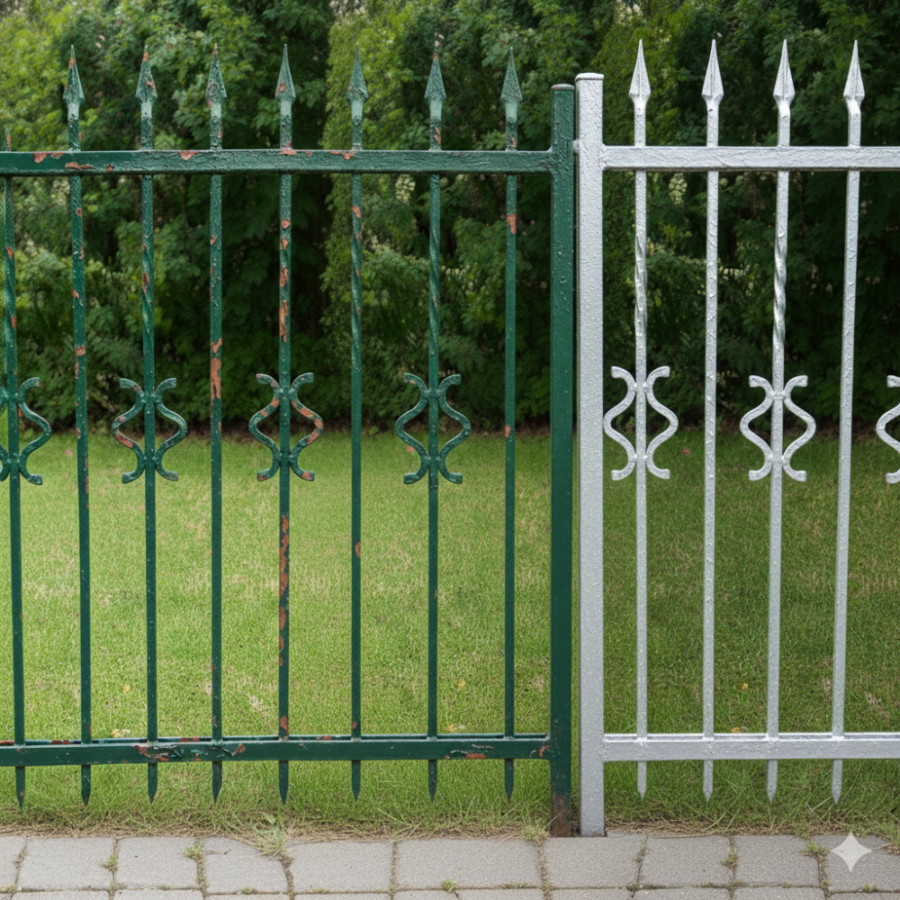
Very high resistance to mechanical damage, erosion, and impacts (which is crucial during transport and assembly, where paint easily chips).
Protection of Internal and Hard-to-Reach Surfaces
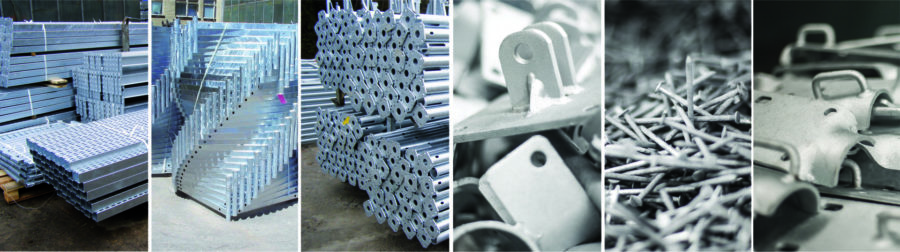
Galvanizing is an immersion method, giving it an advantage over painting. The liquid zinc flows freely and reaches every part of the structure—including the inside of pipes and closed profiles. As a result, the element is protected from the inside as well, which is practically impossible to achieve with brush or spray painting. This prevents dangerous hidden corrosion that destroys the structure from within.
Resistance to External Factors (pH and Temperature)
The zinc coating shows resistance across a wide range of operating conditions:
-
It is resistant to temperatures up to 200°C for continuous exposure (and up to 275°C momentarily).
-
It withstands environments with a pH from 5.5 to 11 (and briefly even up to pH 14, e.g., in contact with fresh concrete), making it significantly more versatile than standard paints.
Economics and Lack of Maintenance
A properly applied zinc coating in an atmospheric corrosion environment lasts from 25 to over 100 years (depending on the coating thickness and the aggressiveness of the environment). This means there is no need to incur cyclical costs for renovation, cleaning, and repainting, making this method the most economical in the long run.
When investing in steel structures, it is worth looking beyond just one or two years of operation. Hot-dip galvanizing, thanks to its cathodic protection mechanism, metallurgical alloying bond, and full, 360° protection—including the inside of profiles—offers a standard of safety and durability unattainable by any paint. Remember, the lack of need for maintenance is a saving of time and money that can be allocated to development.
If you are looking for a guarantee that your agricultural machinery, trailers, or road barriers will last for decades, there is only one choice.
Want to learn more about the galvanizing process and get a quote for your project?
Contact our experts at Cynkomet:
- Piotr Hrebin, Sales Manager +48 510 952 160
- Customer Service Czarna Białostocka Galvanizing Plant 85 710 10 49
- Customer Service Wyszków Galvanizing Plant 29 643 20 85